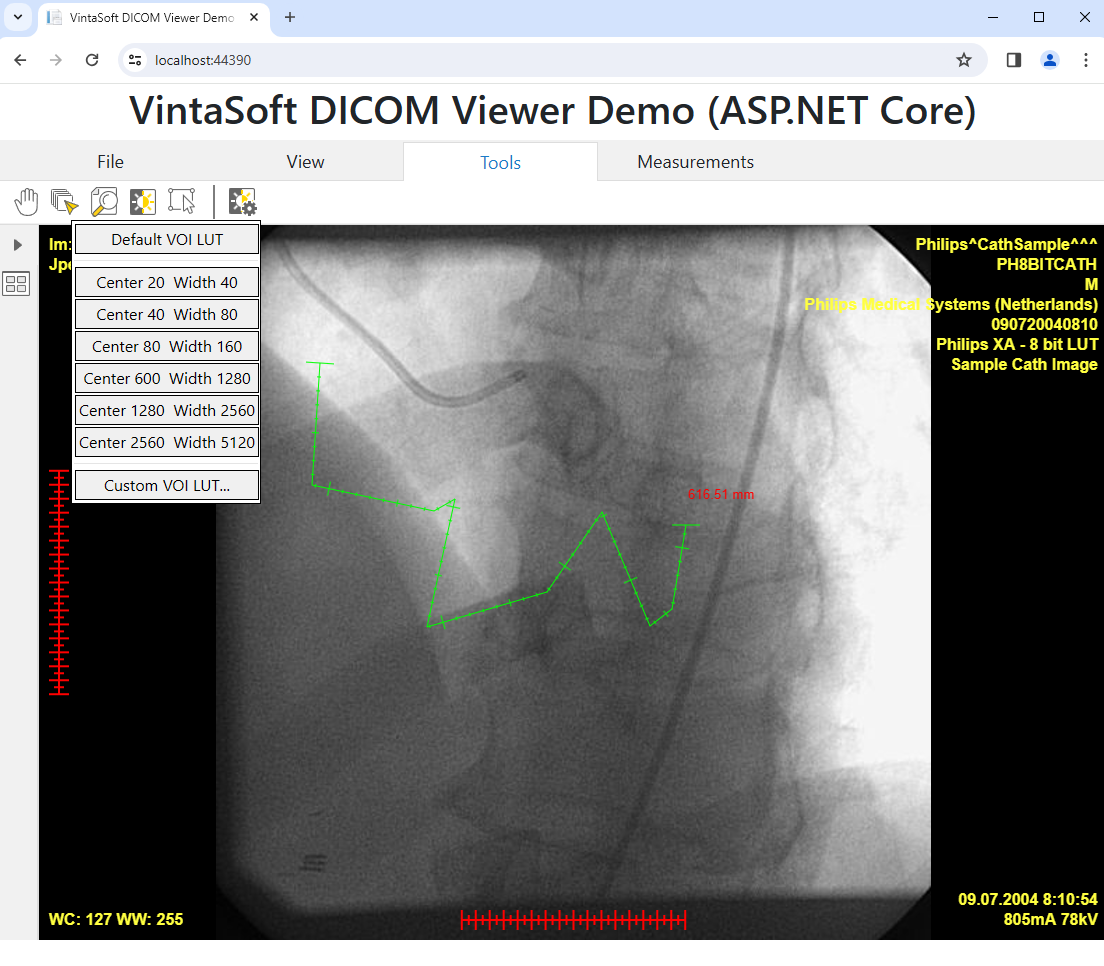
Add web DICOM viewer to an "ASP.NET Core Web App (Model-View-Controller)" application
In This Topic
This tutorial shows how to create a blank "ASP.NET Core Web App (Model-View-Controller)" application in Visual Studio .NET 2026 and add DICOM viewer to ASP.NET Core application.
Here are steps, which must be done:
-
Create a blank "ASP.NET Core Web App (Model-View-Controller)" application.
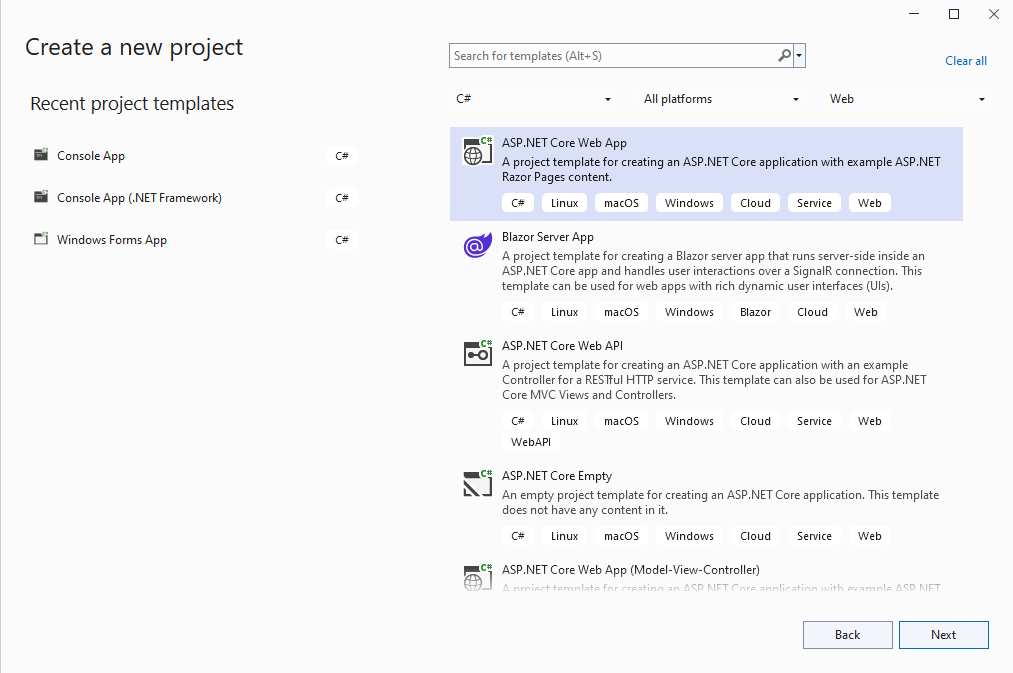
Open Visual Studio .NET 2026 and create a new project, of "ASP.NET Core Web App (Model-View-Controller)" application type:
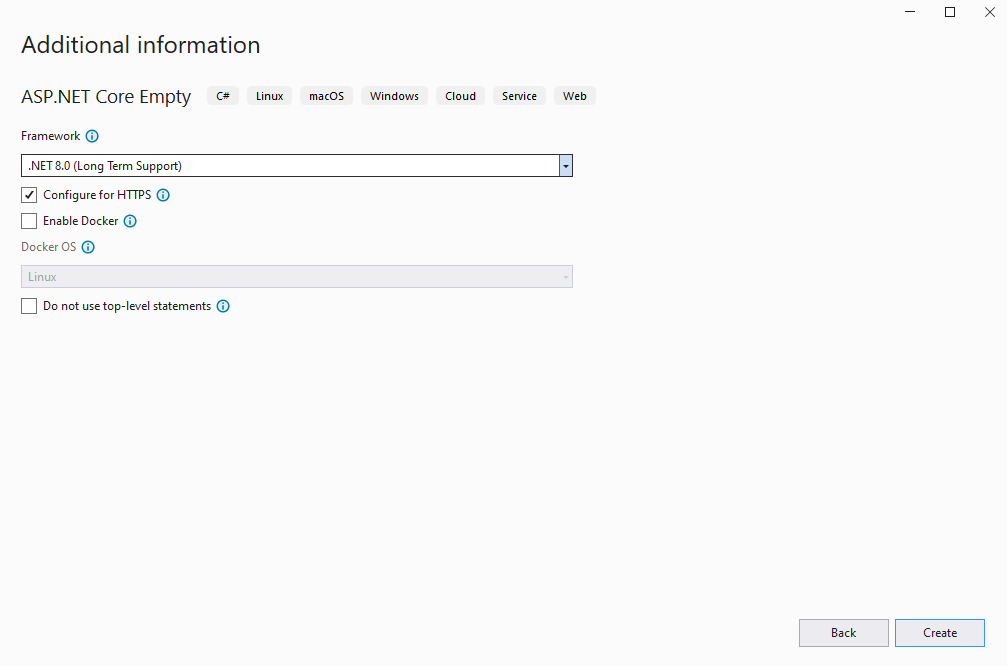
Configure the project to use .NET 10.0:
-
Server side: Add references to the Vintasoft nuget-packages to the ASP.NET Core application.
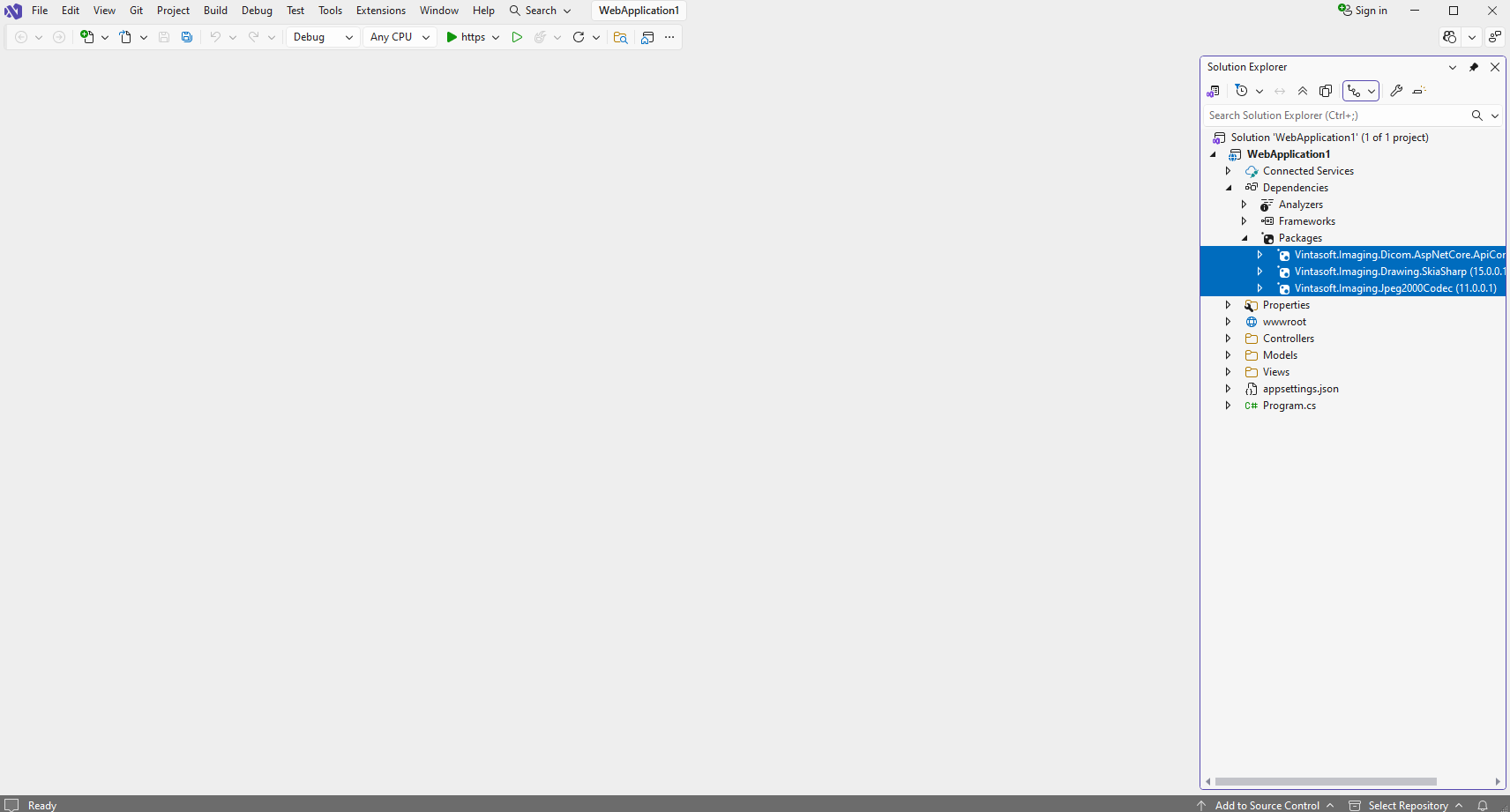
Add references to the nuget-packages "Vintasoft.Imaging.Dicom.AspNetCore.ApiControllers" and "Vintasoft.Imaging.Jpeg2000Codec" to the ASP.NET Core application. Other necessary nuget-packages will be added automatically.
-
Server side: Specify drawing engine, which should be used by VintaSoft Imaging .NET SDK for drawing of 2D graphics.
If ASP.NET application must be used in Windows or Linux, SkiaSharp drawing engine should be used.
If ASP.NET application must be used in Windows only, System.Drawing or SkiaSharp drawing engine should be used.
Here are steps, which should be made for using SkiaSharp engine:-
Add reference to the "Vintasoft.Imaging.Drawing.SkiaSharp" nuget-package. Reference to the "SkiaSharp" nuget-package version 3.119.0 will be added automatically.
- Open "Program.cs" file, add code line "Vintasoft.Imaging.Drawing.SkiaSharp.SkiaSharpDrawingFactory.SetAsDefault();" at the beginning of file - added code specifies that VintaSoft Imaging .NET SDK should use SkiaSharp library for drawing of 2D graphics.
Here are steps, which should be made for using System.Drawing engine:-
Add reference to the "Vintasoft.Imaging.Gdi" nuget-package.
- Open "Program.cs" file, add code line "Vintasoft.Imaging.Drawing.Gdi.GdiGraphicsFactory.SetAsDefault();" at the beginning of file - added code specifies that VintaSoft Imaging .NET SDK should use System.Drawing library for drawing of 2D graphics.
-
Add reference to the "Vintasoft.Imaging.Drawing.SkiaSharp" nuget-package. Reference to the "SkiaSharp" nuget-package version 3.119.0 will be added automatically.
-
Server side: Create web services, which allow to upload/download file and view DICOM images.
-
Create web service that allows to upload/download file
-
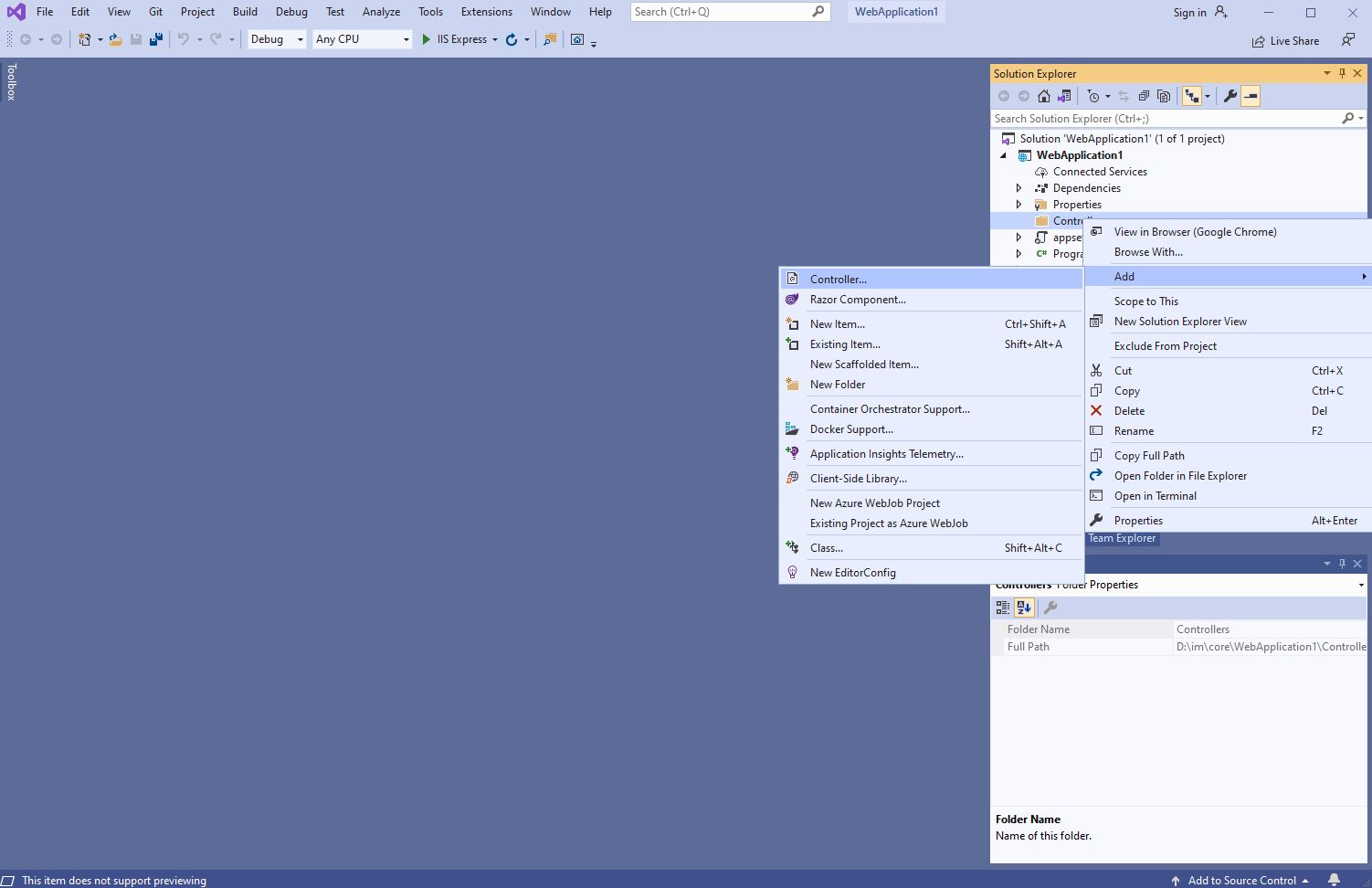
Press the right mouse button on the "Controllers" folder and select the "Add => Controller..." menu from context menu
-
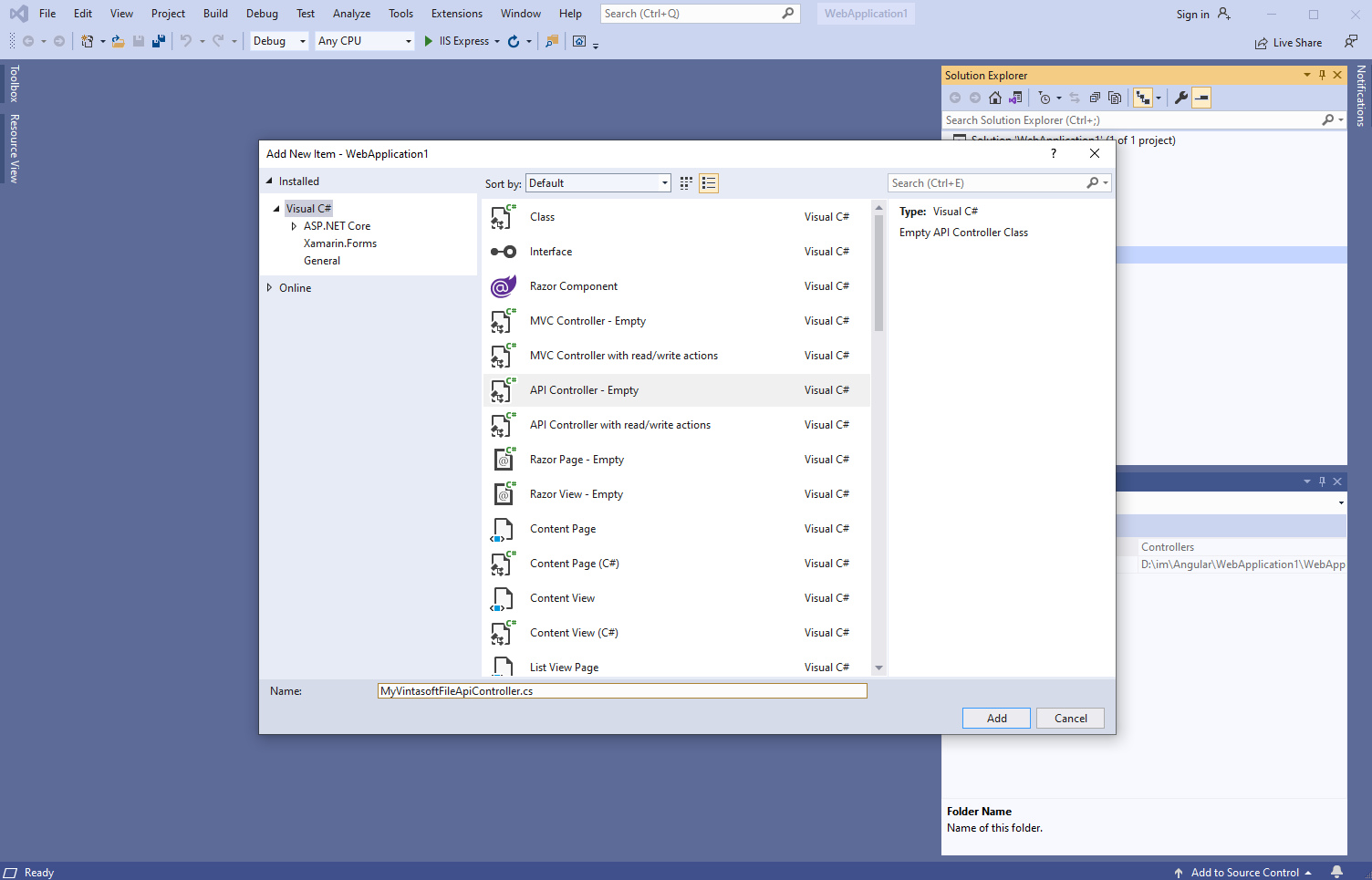
Select "Empty API controller" template, set the controller name to the "MyVintasoftFileApiController" and press the "Add" button
-
Specify that MyVintasoftFileApiController class is derived from Vintasoft.Imaging.AspNetCore.ApiControllers.VintasoftFileApiController class
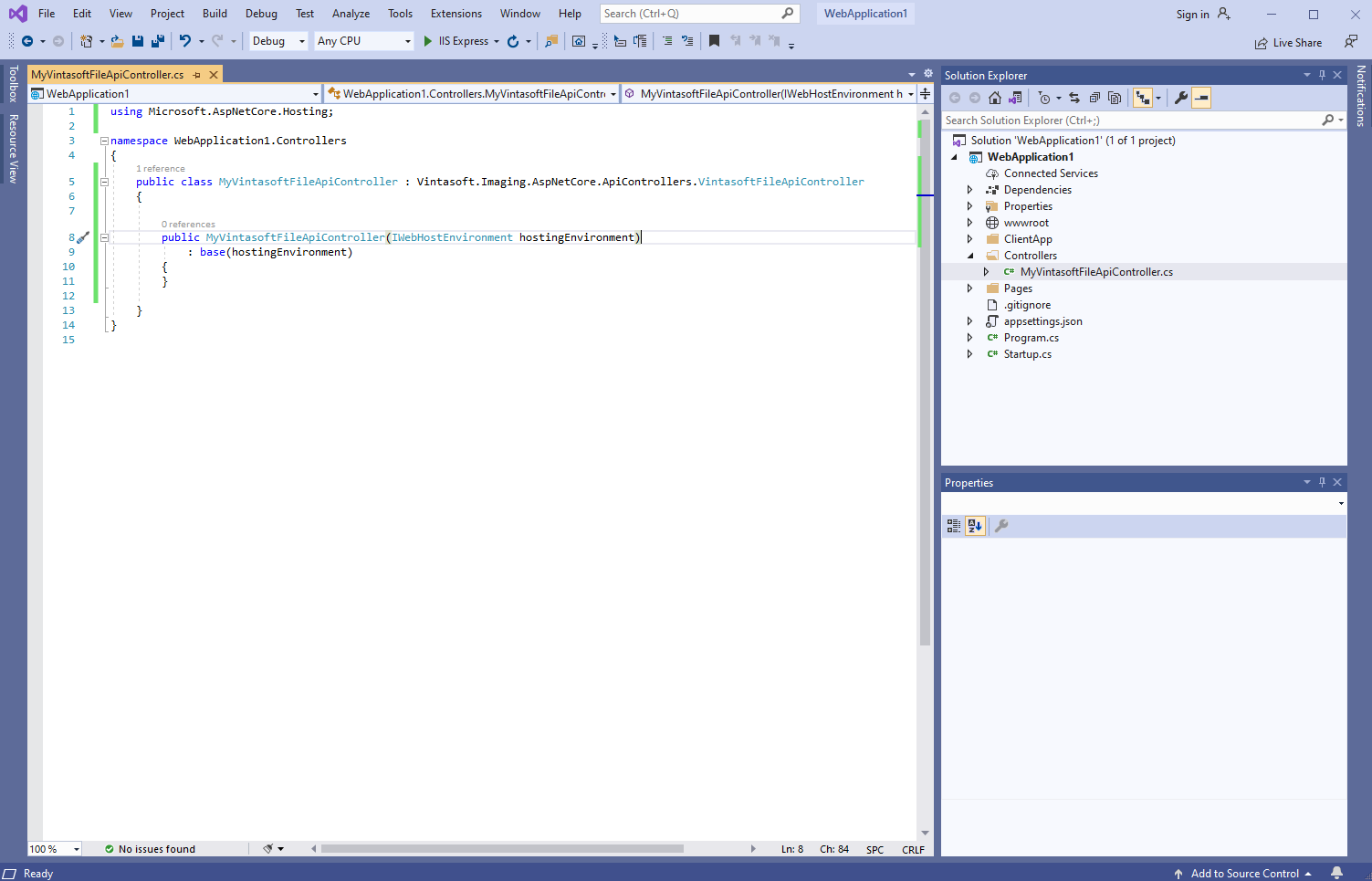
Here are source codes of MyVintasoftFileApiController class:
-
Press the right mouse button on the "Controllers" folder and select the "Add => Controller..." menu from context menu
-
Create web service that allows to work with DICOM images
-
Press the right mouse button on the "Controllers" folder and select the "Add => Controller..." menu from context menu
-
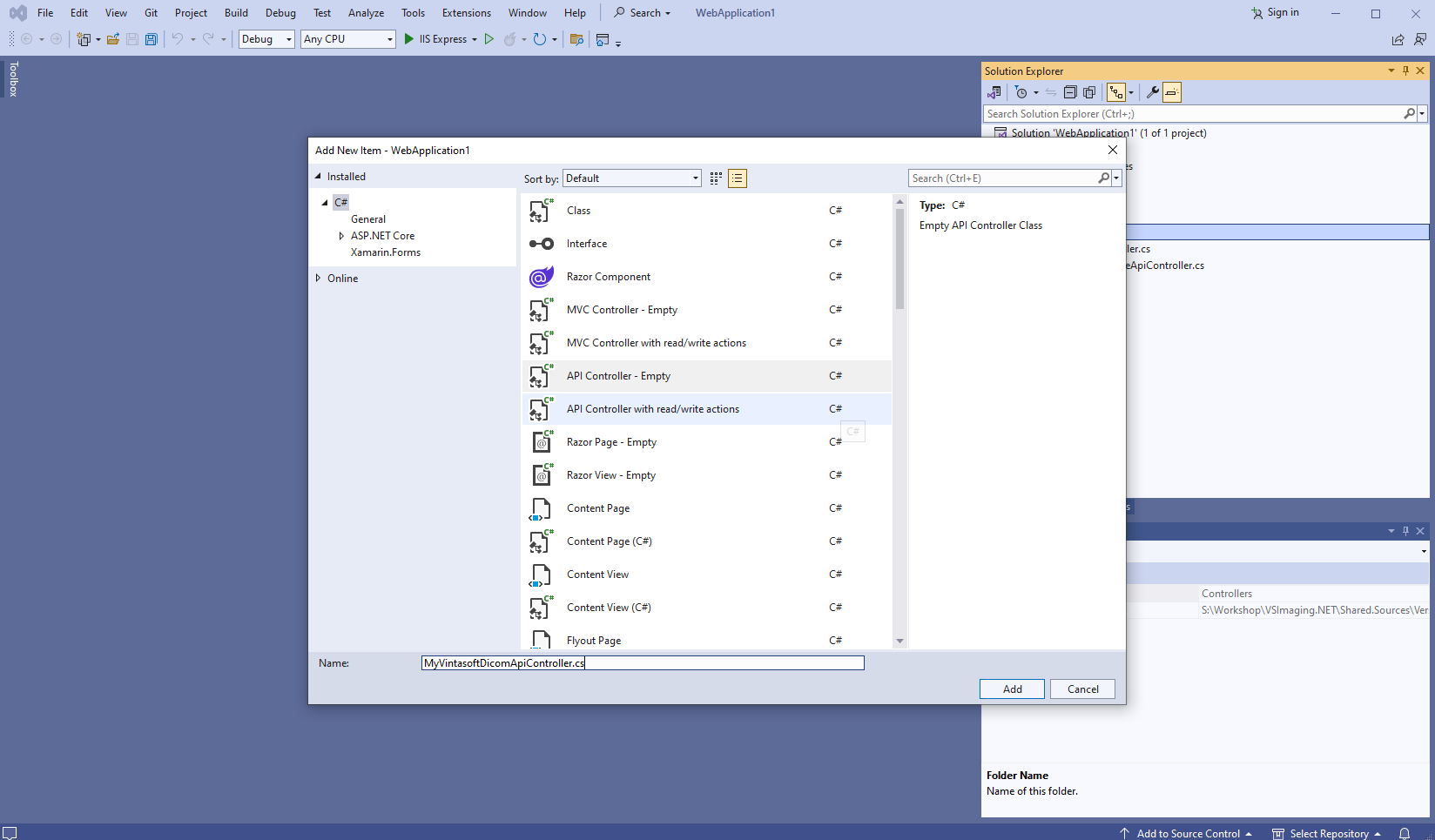
Select "Empty API controller" template, set the controller name to the "MyVintasoftDicomApiController" and press the "Add" button
-
Specify that MyVintasoftDicomApiController class is derived from Vintasoft.Imaging.Dicom.AspNetCore.ApiControllers.VintasoftDicomApiController class
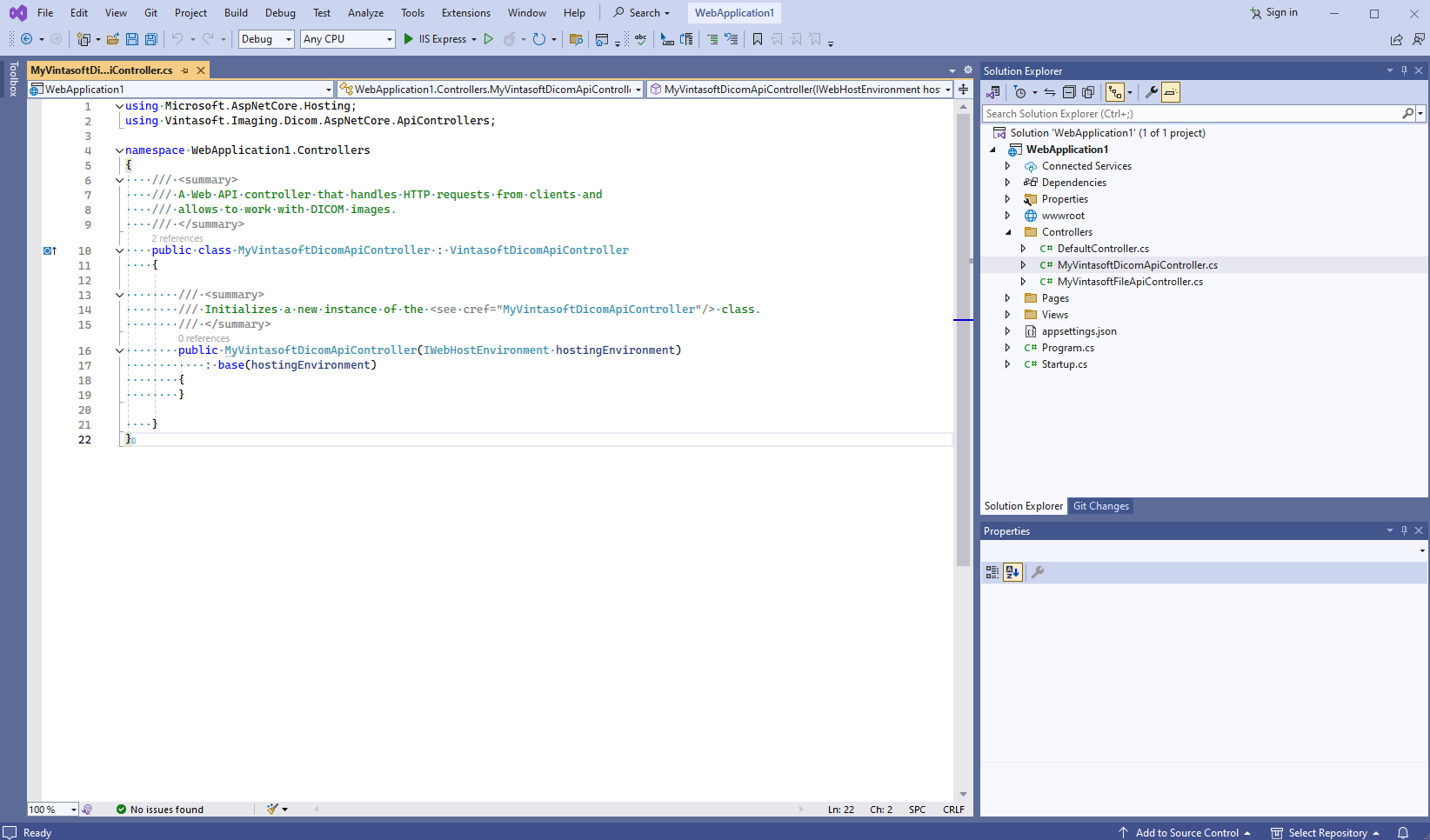
Here are source codes of MyVintasoftDicomApiController class:
-
Press the right mouse button on the "Controllers" folder and select the "Add => Controller..." menu from context menu
-
-
Client side: Add JavaScript libraries to the project.
-
Add the "wwwroot\lib\Vintasoft\" folder to ASP.NET Core application.
- Copy Vintasoft.Shared.js, Vintasoft.Imaging.js, Vintasoft.Imaging.css, Vintasoft.Imaging.Dicom.js, Vintasoft.Imaging.Dicom.css files from "<InstallPath>\VintaSoft Imaging .NET 15.0\Bin\JavaScript\" folder into "wwwroot\lib\Vintasoft\" folder.
-
Specify, which "standard" dialogs (show DICOM metadata, etc) should be used by web DICOM viewer
-
If web DICOM viewer should use ready-to-use "standard" Bootstrap dialogs:
- Add Bootstrap and jQuery libraries to the project.
- Copy Vintasoft.Imaging.Dialogs.Bootstrap.js and Vintasoft.Imaging.Dicom.Dialogs.Bootstrap.js files from "<InstallPath>\VintaSoft Imaging .NET 15.0\Bin\JavaScript\" folder into "wwwroot\lib\Vintasoft\" folder.
-
If web DICOM viewer should use ready-to-use "standard" jQuery UI-dialogs:
- Add jQuery and jQuery UI libraries to the project.
- Copy Vintasoft.Imaging.Dialogs.jQueryUI.js and Vintasoft.Imaging.Dicom.Dialogs.jQueryUI.js files from "<InstallPath>\VintaSoft Imaging .NET 15.0\Bin\JavaScript\" folder into "wwwroot\lib\Vintasoft\" folder.
- If web DICOM viewer should use custom "standard" dialogs, please read how to create custom "standard" dialogs here.
-
If web DICOM viewer should use ready-to-use "standard" Bootstrap dialogs:
-
Add the "wwwroot\lib\Vintasoft\" folder to ASP.NET Core application.
-
Client side: Add JavaScript code that allows to display DICOM images.
-
Create folder "wwwroot\UploadedImageFiles\SessionID" and copy test DICOM file "<SdkInstallPath>\VintaSoft\Imaging .NET 15.0\Examples\ASP.NET Core\CSharp\AspNetCoreImagingDemo\wwwroot\UploadedImageFiles\LossyJpeg_Monochrome2_000.0000.dcm" to the folder. This file will be displayed in DICOM viewer.
-
Open file "Views\Home\Index.cshtml".
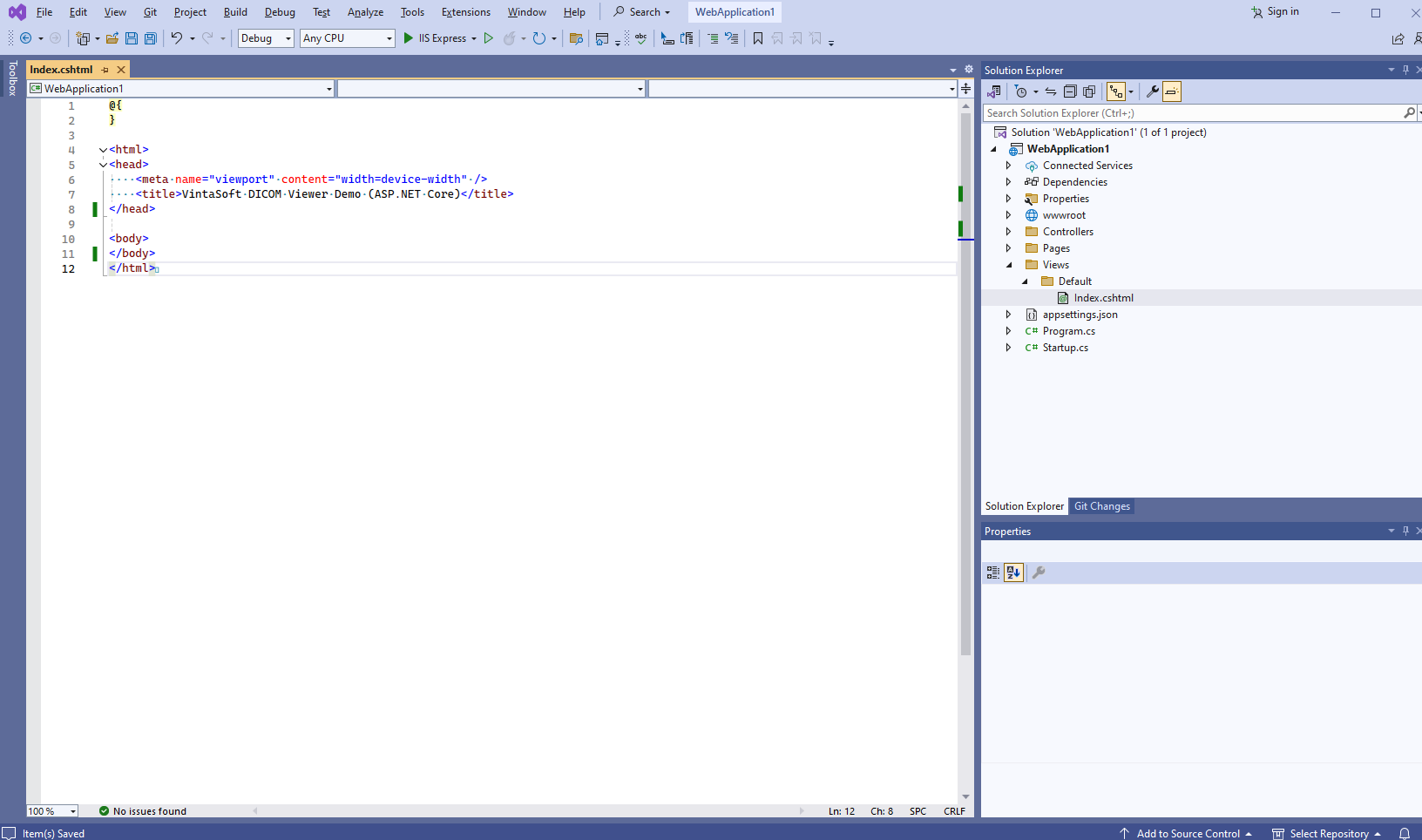
Add references to used JavaScript libraries:-
If Bootstrap dialogs are used, add references to the Bootstrap files and Vintasoft JavaScript files.
Here is HTML code that adds references to the Bootstrap and Vintasoft JavaScript files:
-
If jQuery UI-dialogs are used, add references to the jQuery files and Vintasoft JavaScript files.
Here is HTML code that adds references to the jQuery and Vintasoft JavaScript files:
Add HTML markup (a div-element that will display DICOM viewer) to the web view:
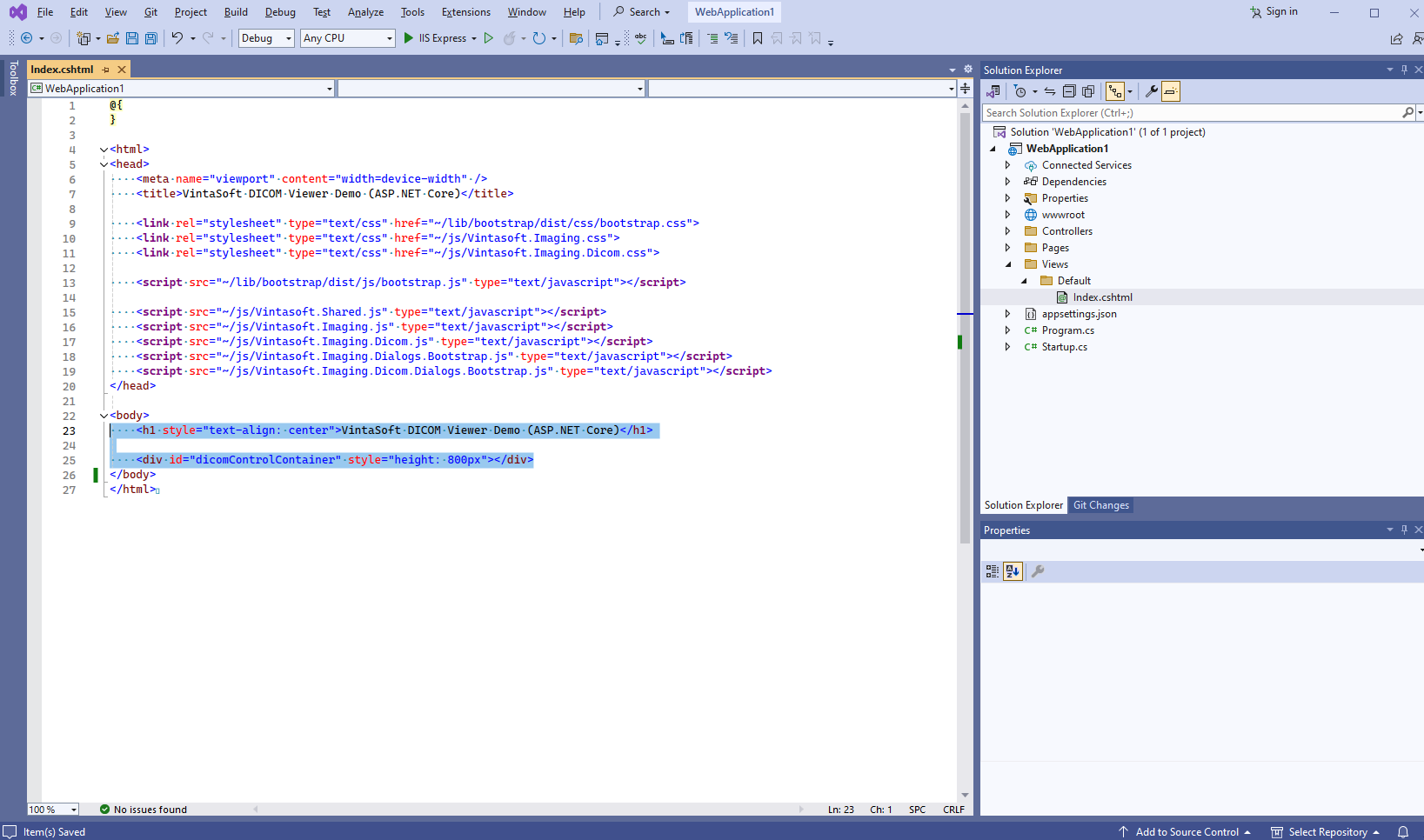
Here is HTML markup code:
-
If Bootstrap dialogs are used, add references to the Bootstrap files and Vintasoft JavaScript files.
-
Open "wwwroot\css\site.css" file, add CSS-style for "dicomControlContainer" to the "site.css" file:
-
Open file "wwwroot\js\site.js", add JavaScript code that initializes and creates DICOM viewer:
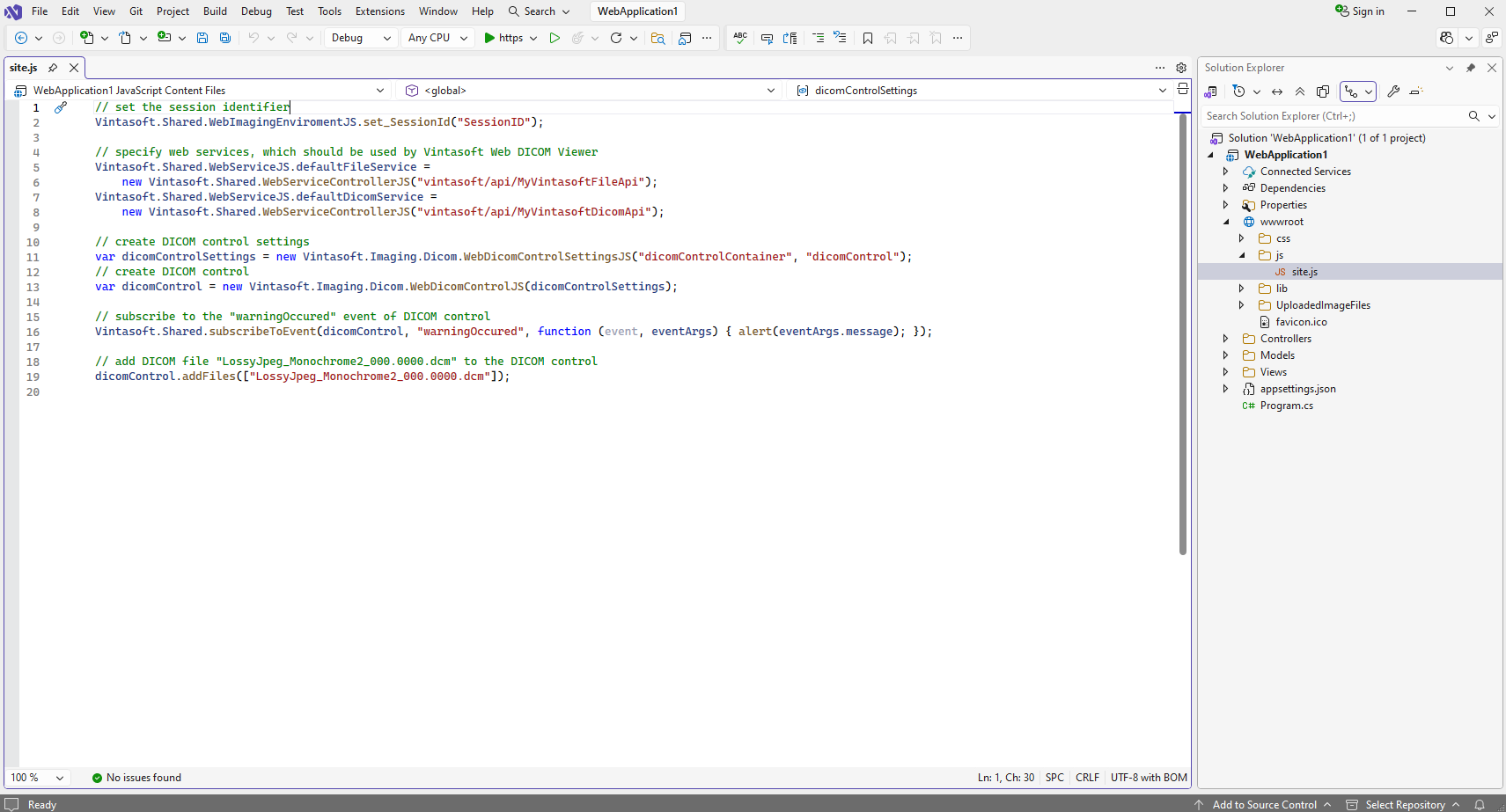
Here is JavaScript code that initializes and displays DICOM viewer:
-
Create folder "wwwroot\UploadedImageFiles\SessionID" and copy test DICOM file "<SdkInstallPath>\VintaSoft\Imaging .NET 15.0\Examples\ASP.NET Core\CSharp\AspNetCoreImagingDemo\wwwroot\UploadedImageFiles\LossyJpeg_Monochrome2_000.0000.dcm" to the folder. This file will be displayed in DICOM viewer.
-
Run the ASP.NET Core application and see the result.